1 / 3
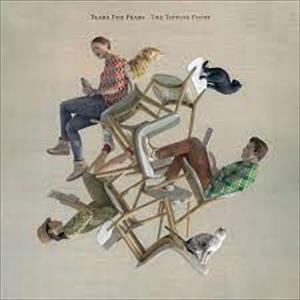
Tears For Fears - Tipping Point
In Search of The Tipping Point The Tipping Point is the second Tears For Fears studio album, post the original 1980s era, to feature both Roland Orzabal and Curt Smith. The first was 2004’s Everybody Loves A Happy Ending, so it’s been a while coming. Roland and Curt discuss the genesis of the album and their long-running partnership… Roland Orzabal: The previous album, Everybody Loves A Happy Ending, was a happy period. We werent sure about getting back together again – whether it would work or how comfortable wed be and how creative it was. But we worked with Charlton Pettus, who Curt had collaborated with previously, and we found that between the three of us there was an incredible balance. Charlton could modulate us, he could interpret us and it worked extremely well. Pretty much the entire narrative of that album was just about us getting back together hence the gag: ‘Everybody Loves A Happy Ending’. With that reunion album under their belt, neither Roland nor Curt were in any particular rush to follow it up. Instead, they played live, primarily in the US, Asia and Australia. These were often short spells on the road, rather than year-long global slogs, with Tears For Fears playing vineyards, summer festivals and often happy to share the bill, or offer a supporting role, to bands like Hall & Oates and Spandau Ballet. Life was good. Curt Smith: The touring side was becoming successful for us. We knew we were getting really good live, our band was coming together to the point where we finally got to this setup that we have now, which is Charlton Pettus playing guitar, Doug Petty on keyboards, [vocalist] Carina Round and Jamie Wollam, our drummer. Once we got that bunch of people together, it all just gelled. So, we were actually enjoying playing live more because we enjoyed playing with these people. Not only playing with them, but theyre the easiest people to tour with and are enjoyable to be around, which has not always been the case. Roland: Plus, when you play live, youre not dealing with record companies. Its simple. Its a direct transaction. Curt: Because we were getting better at it, and enjoying it more, thats what we were concentrating on. We didnt do lots of it, its not like we were on tour all year – we were doing something like six weeks at a time and then going home. We both had kids that we were bringing up at the time, so we didnt want to be away for too long. While they both enjoyed this work-life balance, Roland and Curt recognised, as time passed, that there was a danger of things getting a little stale. Curt: It did get to a point, maybe seven or eight years ago, where we were playing the same sort of set all the time – not exactly the same, but we didnt have new music. It was getting a little boring, and the only way to liven that up would be to maybe make some new music. Thats when the discussion started about us making a new record together. I wouldnt have been unhappy to see out my days playing the hits, but it just wouldnt have been quite as gratifying. You end up turning into an actor more than a musician because youre just going through the motions. You know your lines, you know your parts, you know everything and you’ve just got to go on and perform them each night. The longer you do that, the harder it is for it to feel genuine. And I thought that adding something new would bring some freshness to it. The pair decided to get to work on writing and recording some new songs, but rather than just letting them get on with it, their management (at the time) had other ideas. Tears For Fears had long been managed by American music veteran Gary Gersh (he had previously signed Nirvana and Sonic Youth to Geffen imprint DGC Records). Gersh suggested that Roland and Curt tried songwriting and producing with younger artists, in an attempt to write ‘commercial’ songs that would – in theory – resonate with a younger audience and help them make an impact in this modern era of streaming and playlists. Roland calls this process ‘speed dating’ and it led the band down a creative cul-de-sac which would ultimately threaten not only the new album, but Roland and Curt’s union. Roland: God bless him, but I sometimes wonder whether Gary was actually a fan of ours. Especially after he walked in on us at Charltons [studio] and said, "Youre not going to get this record done, with Charlton, in this studio". The message was: "I dont trust you". He comes from an A&R background, so I can kind of understand why he didnt trust the artist, especially when they go around shooting themselves in the head or overdosing on heroin. You know, theyre not a trustworthy type! So, thats when we were sucked into the speed dating way of writing. Some might suggest that a band who enjoyed two consecutive number one singles in America in the 1980s (‘Everybody Wants to Rule The World’ and ‘Shout’) both taken from a number one album [Songs From The Big Chair] don’t need lessons from youngsters when it comes to writing hits. But Curt and Roland were open and humble enough to give it a go and not reject the idea outright. Roland: We were willing to do it, because theres an element of self-doubt in everyone. And to be honest with you, back then, we were searching for a direction. We met some good people. We always came away with something. Curt: It may have worked and we did find one good relationship with Sacha Skarbek [British songwriter/producer who has worked with James Blunt, Adele, Lana Del Rey, amongst others], who we ended up working with on The Tipping Point. In 2017, the year Tears For Fears triumphantly played an emotional homecoming show at London’s Royal Albert Hall, Universal Music released a greatest hits called Rule The World. This contained the first new material from the band in over a decade. Roland: We had a finished album, of 12 songs, which our manager decided wasn’t right for Warner Brothers [a deal had been signed]. He said we should go back to Universal who have our back catalogue. So, that was the idea. We had to buy the album off Warner Brothers and Universal Music took two songs off it – I Love You But Im Lost and Stay – and put out the greatest hits, with the idea that once the greatest hits was out they would then release the album. Luckily, they didnt; but at the time it felt a bit weird, like a cruel Universal trick. The deal [for the album] hadnt been done, so they had no obligation to do it. So, that left us with a slightly depleted album. I took time away, and during that period, we listened to what we had and fell out of love with it. When we amassed everything wed done, we had around 12 attempts at a modern hit single. Some of them are great, but that didn’t make it a Tears For Fears album, and it wouldnt have done anything. People want ‘the story’. People want to see a clear emotional core. Curt: We dont really care about making a commercial record, I dont think, it just so happens that what we like is sometimes commercial. The depth of the music is equally as important for us. As Ive said, many times before, if you look back at albums weve done, for the time, those songs werent obviously commercial. Mad World wasnt obviously commercial; Sowing the Seeds of Love wasnt obviously commercial. Yes, they became hits, but they didnt sound like anything else that was out at the time. And I think you have to embrace that. I think that the only way a Tears For Fears record can be made is for us to do it ourselves, because the essence of it is what me and Roland agree on. If theres another person involved, which can help, then it needs to be someone who understands us, someone who knows how to deal with both of us, not just one of us, because were very different. That is the case with both Sacha [Skarbek] and Charlton [Pettus]. ‘I Love You But I’m Lost’ is notably absent from The Tipping Point (“I like it”, says Roland. “It’s one of the songs we didn’t agree on,” offers Curt, diplomatically) but ‘Stay’ does make the cut and Curt Smith admits that this song is about him contemplating walking away from Tears For Fears for a second time. Curt: We were doing this album, the broken album as Roland calls it, and I didnt like it. In particular, I didnt think it had a narrative, a flow, and it was all very much one thing. And you get to that point where you ask yourself "Can I really do this?". For me, first and foremost, its always about your mental and physical health, and I just wasnt enjoying it. I dont want this ever to just become a job, because I think that takes away from what music has given me, over the years, which is an outlet. If youre doing it just for the sake of doing it, it demeans the music. So, I was at the point where I wasn’t happy with it and Roland was actually quite liking it. Gary Gersh [the manager] liked it, but wanted something more like that. And I was sort of stuck and no one was understanding where I was coming from. If I had left, it would have been a painful decision, because Tears For Fears has been part of my life, and Roland has been part of my life, for a very long time. So the song ‘Stay’ is really about that. It was a very sad time for me. Despite this unhappy situation, the two men didn’t sit down and have a much-needed heart-to-heart. Communication between the LA-based Curt and Roland, who was primarily in the UK, was less than ideal at the time. Roland: Curt’s feelings got a little bit filtered through the manager, but I was getting the distinct impression that he wasnt happy. Sometimes its hard; we dont share quite as much information as we should. And so, it was like, "Okay, I didnt realise that…". Curt: I think that Gary enjoyed putting himself between us. He enjoyed being the broker and the one that we both talked to, privately. He then had control over what information he fed both of us, and it wasnt a very healthy situation. But eventually, once we decided to part ways with Gary, we sat down and worked it out ourselves. Weirdly enough, coming to the understanding that Gary wasnt going to work out for us was the best thing that could have happened. That break-up allowed us to finish the album. Both Roland and Curt agree that The Tipping Point’s opener, ‘No Small Thing’ was the song that got things back on track, and enabled the two men to put the ‘broken’ album behind them and work together productively while feeling excited about a fresh approach and a new direction. Roland: None of those original [‘speed dating’] tracks got anywhere near this new album. Curt: The record we first finished, I couldnt listen to. That was the problem. I listened to it and I was exhausted by the end of it. It didnt tell me a story; it didnt make me feel good – it made me feel angry! [laughs]. And I dont like that feeling. You know, I prefer more calm. But then thats the balance between the two of us. Roland is more intense, and that has its place, and I tend to be more introspective and quiet. And somewhere in the middle is where you get Tears For Fears. Roland: When we got together in early 2020, just before the pandemic kicked off, we were searching for where to go. We sat down with acoustic guitars in Curts house – for the first time since we were about 18 – and Curt came up with this riff, and then we were off, with No Small Thing. I dont know where that came from but I took it back to England and finished it. I wasnt sure about it, but my wife said: "Its great, send it to Curt!". So, I sent it to him and he said "This is really good". Then when we got together at the end of 2020, we finished it. That was the key track, because it was not like anything we’d attempted. Not even like anything wed done before, really, with the acoustic Dylan-esque, Johnny Cash-esque intro and then evolving into a Led Zeppelin, crazy Beatles-type ending. But thats why we chose it as the first track on the album because that was the song that unlocked it. And then, very quickly, Rivers of Mercy, Break the Man and Master Plan all came along. Curt: Once that track came, along with Rivers of Mercy and Please Be Happy, suddenly we had a narrative. I think those all tell a story and while its not like a prevailing theme, it has a story that had a flow to it that we were missing before. Before that, everything was focused on, you know, “Is it up tempo?”, “Is it commercial?”, “Is it hooky?” and “Is it modern?”. We threw all that out the window and said lets do something we like, something that inspires and is interesting to us. With No Small Thing when we sat down with acoustic guitars and then when Roland sent me his initial work on the recording, it was like "Yes, this is interesting. This makes me want to listen", so it ticked all the boxes for me. As with the previous album, Everybody Loves A Happy Ending, Curt co-writes a number of tracks on The Tipping Point and he acknowledges that it’s an important part of the creative partnership with Roland. Curt: I think its very important, but to me, its more important that theres two voices. So, if you take Please Be Happy on this album, thats Rolands song that I’m singing, but its the combination of voices that makes it work and that also gives it an ebb and flow. Our voices are very different. Roland tends to be in your face and Im very kind of introspective and a lot darker and that balance works very well. Theres a sound when we sing together, as well, thats very specific to us. And thats why I think its great that ‘The Tipping Point’ was the first single, because were both singing virtually every line of that song. Thats what makes it sound like us. For a band who created three sonically different hit albums in the 1980s, ‘the sound’ of Tears For Fears is not easy to define. Curt: The only definition Ive ever been able to come up with is that its the stuff we agree on. The nature of a partnership is that a lot of the time youre making concessions to the other party, youre basically giving some leeway. And theres only so far you can be pushed. But you know, where we converge and agree on things, thats the sound of Tears For Fears. If Tears for Fears acknowledge that attempting to have a commercial chart hit single is neither realistic, nor creatively satisfying (“it’s a stupid thing to aim for” says Curt), then surely it must come as a relief that the pressure is off, to a certain extent, and that there is no Dave Bates (their old A&R man from the 1980s) saying “where’s the single”? Curt: Well, we did we have that. We had Gary Gersh saying "wheres the single?" He was the A&R guy! But eventually, once we left Gary – on good terms, I hasten to add, were still friends with him – and hooked up with our current management, they said, "this is great, we love it. What else would you like to do?" And so, we finished the album on our own, sequenced it exactly as it is being released, and they gave it to Concord, who said, "Its wonderful. Well take it. Thank you". So, no one has changed anything. There’s been a couple of conversations, as far as singles go. But in the end, theyve deferred to us. While Orzabal made two albums as Tears For Fears without Smith, in the 1990s, few would argue that the beating heart of the group remains Roland and Curt working together in partnership, if not always in harmony, to one degree or another. They endured what turned out to be a decade-long ‘trial separation’ but today, almost 40 years since the release of their first single, ‘Suffer The Children’, I ask the two men if The Tipping Point is the equivalent of them ‘renewing their vows’. They enjoy the joke, but Roland then reflects seriously on this within the wider scope of some life-changing events. Roland [Laughing, as Curt chuckles heartily, next to him]: Funnily enough, we were going to call the album Renewing Our Vows, thats very insightful of you. I think what it was, we live in different parts of the world, most of the time, and I was going through a pretty bad time domestically, with Carolines illness and stuff [Roland’s first wife sadly died in 2017]. I was unknowingly quite angry, as one gets, and I was maybe – not maybe, but definitely – introducing an element of that into mine and Curt’s relationship. You know, the whole thing of Caroline passing, and then me getting ill. And then getting married again, to Emily, whos American and quite polite and gentle. And she corrects me, she gives me another perspective and she always tries to introduce an element of respect into everything. So, it was really her that urged me to start treating this guy [gestures towards Curt] with a bit more respect and after that – and a couple of rehabs – it became quite easy, you know. Then I came at it from a different perspective. When I was having a bad year, I only listened to the album maybe once, the old [broken] album and in my stupor, I recall thinking we need more Curt singing, we need more Curt. We needed a lot more balance, and we need it to sound like a Tears For Fears record. That was extremely important. Curt: As much as we have a reputation for butting heads all the time, we dont. Because eventually, we get to a place where we either just dont work together, or we decide that, you know what, were actually listening to each other; this is good! And that happened last year [in 2020]. Once we get to a point where were listening to each other, then… Roland: [nodding in agreement] …Then it becomes easy. Notable collaborators on The Tipping Point are Sacha Skarbek (who co-produces five songs and co-writes two) and Charlton Pettus (who has a hand in the production of seven songs, co-writes five and mixes most of the record). Curt: Charlton plays guitar, is in the live band and is an integral part of what were doing; both what we did on this album and what we did on the last album. Roland: We did virtually all of what I call the ‘broken’ album with Sacha and while he may not have created all those songs, he certainly finessed them. He is extremely easy to work with, and most of all, he is a musician, a great keyboard player, and therefore he will talk back to you through music, not through concepts or philosophy or theory – or the technical aspects of recording, which are pretty easy to do nowadays [anyway]. Everyone has a laptop with GarageBand. He really is a lovely guy and it was a joy working with him. And what do Tears For Fears make of the modern era where the majority of music fans consume music differently, primarily via streaming. Is that even a concern for them, as artists? Curt: On one level, its beneficial to us. Because a new audience is discovering us. The joy of streaming is that younger people, people that arent necessarily your audience are basically surfing around and discovering us. And these streaming services might suggest a Tears for Fears track because we were an influence for some young band. Or because its music thats similar to something in someones playlist. My kids are consuming far more music [than I am]. Thats the beneficial side, us having a huge and far greater audience than we ever had. The downside, of course, is that they dont pay us fairly. I think theyve paid the record companies and the record companies are not paying us fairly, for the work we do. And without us, they wouldnt exist. But hopefully that will slowly change over time, and well get fairly compensated for the work we do. So how will Tears For Fears measure success with The Tipping Point, when it goes out into the marketplace? Curt: Dont know. Dont care! Roland: I think as long as it goes in at number one... [laughs] Curt: Personally, I measure the success of an album in terms of how much I like it. And how happy we are with it, more than what it does, commercially. Is The Tipping Point going to be the last Tears For Fears album? Roland: We dont know. Never say never. There may well be another period of intense, turbulent events, which sparks off some creativity. But we dont really know. I mean, obviously, were 60, so I dont think were going to wait 17 years – we might not even be here in two! Curt: And I think its the case with every record we make, theres no plans for the next one. Its enough effort and blood and guts to try and finish what we have and theres that sense of relief afterwards, so the idea of going back… Roland: Yeah, its just its a Sisyphean task. This Tears For Fears interview was conducted and edited by Paul Sinclair of SuperDeluxeEdition.com in September 2021. Suggested pull-quotes (if needed): “When you play live, youre not dealing with record companies. Its simple. Its a direct transaction” Roland Orzabal “We were playing the same sort of set all the time… It was getting a little boring” Curt Smith “We dont really care about making a commercial record” Curt Smith “My wife, Emily, urged me to start treating this Curt with a bit more respect” Roland Orzabal “We were doing the broken album as Roland calls it, and I didnt like it” Curt Smith “I recall thinking we need more Curt singing, we need more Curt. We needed a lot more balance, and we need it to sound like a Tears For Fears record” Roland Orzabal
In Search of The Tipping Point The Tipping Point is the second Tears For Fears studio album, post the original 1980s era, to feature both Roland Orzabal and Curt Smith. The first was 2004’s Everybody Loves A Happy Ending, so it’s been a while coming. Roland and Curt discuss the genesis of the album and their long-running partnership… Roland Orzabal: The previous album, Everybody Loves A Happy Ending, was a happy period. We werent sure about getting back together again – whether it would work or how comfortable wed be and how creative it was. But we worked with Charlton Pettus, who Curt had collaborated with previously, and we found that between the three of us there was an incredible balance. Charlton could modulate us, he could interpret us and it worked extremely well. Pretty much the entire narrative of that album was just about us getting back together hence the gag: ‘Everybody Loves A Happy Ending’. With that reunion album under their belt, neither Roland nor Curt were in any particular rush to follow it up. Instead, they played live, primarily in the US, Asia and Australia. These were often short spells on the road, rather than year-long global slogs, with Tears For Fears playing vineyards, summer festivals and often happy to share the bill, or offer a supporting role, to bands like Hall & Oates and Spandau Ballet. Life was good. Curt Smith: The touring side was becoming successful for us. We knew we were getting really good live, our band was coming together to the point where we finally got to this setup that we have now, which is Charlton Pettus playing guitar, Doug Petty on keyboards, [vocalist] Carina Round and Jamie Wollam, our drummer. Once we got that bunch of people together, it all just gelled. So, we were actually enjoying playing live more because we enjoyed playing with these people. Not only playing with them, but theyre the easiest people to tour with and are enjoyable to be around, which has not always been the case. Roland: Plus, when you play live, youre not dealing with record companies. Its simple. Its a direct transaction. Curt: Because we were getting better at it, and enjoying it more, thats what we were concentrating on. We didnt do lots of it, its not like we were on tour all year – we were doing something like six weeks at a time and then going home. We both had kids that we were bringing up at the time, so we didnt want to be away for too long. While they both enjoyed this work-life balance, Roland and Curt recognised, as time passed, that there was a danger of things getting a little stale. Curt: It did get to a point, maybe seven or eight years ago, where we were playing the same sort of set all the time – not exactly the same, but we didnt have new music. It was getting a little boring, and the only way to liven that up would be to maybe make some new music. Thats when the discussion started about us making a new record together. I wouldnt have been unhappy to see out my days playing the hits, but it just wouldnt have been quite as gratifying. You end up turning into an actor more than a musician because youre just going through the motions. You know your lines, you know your parts, you know everything and you’ve just got to go on and perform them each night. The longer you do that, the harder it is for it to feel genuine. And I thought that adding something new would bring some freshness to it. The pair decided to get to work on writing and recording some new songs, but rather than just letting them get on with it, their management (at the time) had other ideas. Tears For Fears had long been managed by American music veteran Gary Gersh (he had previously signed Nirvana and Sonic Youth to Geffen imprint DGC Records). Gersh suggested that Roland and Curt tried songwriting and producing with younger artists, in an attempt to write ‘commercial’ songs that would – in theory – resonate with a younger audience and help them make an impact in this modern era of streaming and playlists. Roland calls this process ‘speed dating’ and it led the band down a creative cul-de-sac which would ultimately threaten not only the new album, but Roland and Curt’s union. Roland: God bless him, but I sometimes wonder whether Gary was actually a fan of ours. Especially after he walked in on us at Charltons [studio] and said, "Youre not going to get this record done, with Charlton, in this studio". The message was: "I dont trust you". He comes from an A&R background, so I can kind of understand why he didnt trust the artist, especially when they go around shooting themselves in the head or overdosing on heroin. You know, theyre not a trustworthy type! So, thats when we were sucked into the speed dating way of writing. Some might suggest that a band who enjoyed two consecutive number one singles in America in the 1980s (‘Everybody Wants to Rule The World’ and ‘Shout’) both taken from a number one album [Songs From The Big Chair] don’t need lessons from youngsters when it comes to writing hits. But Curt and Roland were open and humble enough to give it a go and not reject the idea outright. Roland: We were willing to do it, because theres an element of self-doubt in everyone. And to be honest with you, back then, we were searching for a direction. We met some good people. We always came away with something. Curt: It may have worked and we did find one good relationship with Sacha Skarbek [British songwriter/producer who has worked with James Blunt, Adele, Lana Del Rey, amongst others], who we ended up working with on The Tipping Point. In 2017, the year Tears For Fears triumphantly played an emotional homecoming show at London’s Royal Albert Hall, Universal Music released a greatest hits called Rule The World. This contained the first new material from the band in over a decade. Roland: We had a finished album, of 12 songs, which our manager decided wasn’t right for Warner Brothers [a deal had been signed]. He said we should go back to Universal who have our back catalogue. So, that was the idea. We had to buy the album off Warner Brothers and Universal Music took two songs off it – I Love You But Im Lost and Stay – and put out the greatest hits, with the idea that once the greatest hits was out they would then release the album. Luckily, they didnt; but at the time it felt a bit weird, like a cruel Universal trick. The deal [for the album] hadnt been done, so they had no obligation to do it. So, that left us with a slightly depleted album. I took time away, and during that period, we listened to what we had and fell out of love with it. When we amassed everything wed done, we had around 12 attempts at a modern hit single. Some of them are great, but that didn’t make it a Tears For Fears album, and it wouldnt have done anything. People want ‘the story’. People want to see a clear emotional core. Curt: We dont really care about making a commercial record, I dont think, it just so happens that what we like is sometimes commercial. The depth of the music is equally as important for us. As Ive said, many times before, if you look back at albums weve done, for the time, those songs werent obviously commercial. Mad World wasnt obviously commercial; Sowing the Seeds of Love wasnt obviously commercial. Yes, they became hits, but they didnt sound like anything else that was out at the time. And I think you have to embrace that. I think that the only way a Tears For Fears record can be made is for us to do it ourselves, because the essence of it is what me and Roland agree on. If theres another person involved, which can help, then it needs to be someone who understands us, someone who knows how to deal with both of us, not just one of us, because were very different. That is the case with both Sacha [Skarbek] and Charlton [Pettus]. ‘I Love You But I’m Lost’ is notably absent from The Tipping Point (“I like it”, says Roland. “It’s one of the songs we didn’t agree on,” offers Curt, diplomatically) but ‘Stay’ does make the cut and Curt Smith admits that this song is about him contemplating walking away from Tears For Fears for a second time. Curt: We were doing this album, the broken album as Roland calls it, and I didnt like it. In particular, I didnt think it had a narrative, a flow, and it was all very much one thing. And you get to that point where you ask yourself "Can I really do this?". For me, first and foremost, its always about your mental and physical health, and I just wasnt enjoying it. I dont want this ever to just become a job, because I think that takes away from what music has given me, over the years, which is an outlet. If youre doing it just for the sake of doing it, it demeans the music. So, I was at the point where I wasn’t happy with it and Roland was actually quite liking it. Gary Gersh [the manager] liked it, but wanted something more like that. And I was sort of stuck and no one was understanding where I was coming from. If I had left, it would have been a painful decision, because Tears For Fears has been part of my life, and Roland has been part of my life, for a very long time. So the song ‘Stay’ is really about that. It was a very sad time for me. Despite this unhappy situation, the two men didn’t sit down and have a much-needed heart-to-heart. Communication between the LA-based Curt and Roland, who was primarily in the UK, was less than ideal at the time. Roland: Curt’s feelings got a little bit filtered through the manager, but I was getting the distinct impression that he wasnt happy. Sometimes its hard; we dont share quite as much information as we should. And so, it was like, "Okay, I didnt realise that…". Curt: I think that Gary enjoyed putting himself between us. He enjoyed being the broker and the one that we both talked to, privately. He then had control over what information he fed both of us, and it wasnt a very healthy situation. But eventually, once we decided to part ways with Gary, we sat down and worked it out ourselves. Weirdly enough, coming to the understanding that Gary wasnt going to work out for us was the best thing that could have happened. That break-up allowed us to finish the album. Both Roland and Curt agree that The Tipping Point’s opener, ‘No Small Thing’ was the song that got things back on track, and enabled the two men to put the ‘broken’ album behind them and work together productively while feeling excited about a fresh approach and a new direction. Roland: None of those original [‘speed dating’] tracks got anywhere near this new album. Curt: The record we first finished, I couldnt listen to. That was the problem. I listened to it and I was exhausted by the end of it. It didnt tell me a story; it didnt make me feel good – it made me feel angry! [laughs]. And I dont like that feeling. You know, I prefer more calm. But then thats the balance between the two of us. Roland is more intense, and that has its place, and I tend to be more introspective and quiet. And somewhere in the middle is where you get Tears For Fears. Roland: When we got together in early 2020, just before the pandemic kicked off, we were searching for where to go. We sat down with acoustic guitars in Curts house – for the first time since we were about 18 – and Curt came up with this riff, and then we were off, with No Small Thing. I dont know where that came from but I took it back to England and finished it. I wasnt sure about it, but my wife said: "Its great, send it to Curt!". So, I sent it to him and he said "This is really good". Then when we got together at the end of 2020, we finished it. That was the key track, because it was not like anything we’d attempted. Not even like anything wed done before, really, with the acoustic Dylan-esque, Johnny Cash-esque intro and then evolving into a Led Zeppelin, crazy Beatles-type ending. But thats why we chose it as the first track on the album because that was the song that unlocked it. And then, very quickly, Rivers of Mercy, Break the Man and Master Plan all came along. Curt: Once that track came, along with Rivers of Mercy and Please Be Happy, suddenly we had a narrative. I think those all tell a story and while its not like a prevailing theme, it has a story that had a flow to it that we were missing before. Before that, everything was focused on, you know, “Is it up tempo?”, “Is it commercial?”, “Is it hooky?” and “Is it modern?”. We threw all that out the window and said lets do something we like, something that inspires and is interesting to us. With No Small Thing when we sat down with acoustic guitars and then when Roland sent me his initial work on the recording, it was like "Yes, this is interesting. This makes me want to listen", so it ticked all the boxes for me. As with the previous album, Everybody Loves A Happy Ending, Curt co-writes a number of tracks on The Tipping Point and he acknowledges that it’s an important part of the creative partnership with Roland. Curt: I think its very important, but to me, its more important that theres two voices. So, if you take Please Be Happy on this album, thats Rolands song that I’m singing, but its the combination of voices that makes it work and that also gives it an ebb and flow. Our voices are very different. Roland tends to be in your face and Im very kind of introspective and a lot darker and that balance works very well. Theres a sound when we sing together, as well, thats very specific to us. And thats why I think its great that ‘The Tipping Point’ was the first single, because were both singing virtually every line of that song. Thats what makes it sound like us. For a band who created three sonically different hit albums in the 1980s, ‘the sound’ of Tears For Fears is not easy to define. Curt: The only definition Ive ever been able to come up with is that its the stuff we agree on. The nature of a partnership is that a lot of the time youre making concessions to the other party, youre basically giving some leeway. And theres only so far you can be pushed. But you know, where we converge and agree on things, thats the sound of Tears For Fears. If Tears for Fears acknowledge that attempting to have a commercial chart hit single is neither realistic, nor creatively satisfying (“it’s a stupid thing to aim for” says Curt), then surely it must come as a relief that the pressure is off, to a certain extent, and that there is no Dave Bates (their old A&R man from the 1980s) saying “where’s the single”? Curt: Well, we did we have that. We had Gary Gersh saying "wheres the single?" He was the A&R guy! But eventually, once we left Gary – on good terms, I hasten to add, were still friends with him – and hooked up with our current management, they said, "this is great, we love it. What else would you like to do?" And so, we finished the album on our own, sequenced it exactly as it is being released, and they gave it to Concord, who said, "Its wonderful. Well take it. Thank you". So, no one has changed anything. There’s been a couple of conversations, as far as singles go. But in the end, theyve deferred to us. While Orzabal made two albums as Tears For Fears without Smith, in the 1990s, few would argue that the beating heart of the group remains Roland and Curt working together in partnership, if not always in harmony, to one degree or another. They endured what turned out to be a decade-long ‘trial separation’ but today, almost 40 years since the release of their first single, ‘Suffer The Children’, I ask the two men if The Tipping Point is the equivalent of them ‘renewing their vows’. They enjoy the joke, but Roland then reflects seriously on this within the wider scope of some life-changing events. Roland [Laughing, as Curt chuckles heartily, next to him]: Funnily enough, we were going to call the album Renewing Our Vows, thats very insightful of you. I think what it was, we live in different parts of the world, most of the time, and I was going through a pretty bad time domestically, with Carolines illness and stuff [Roland’s first wife sadly died in 2017]. I was unknowingly quite angry, as one gets, and I was maybe – not maybe, but definitely – introducing an element of that into mine and Curt’s relationship. You know, the whole thing of Caroline passing, and then me getting ill. And then getting married again, to Emily, whos American and quite polite and gentle. And she corrects me, she gives me another perspective and she always tries to introduce an element of respect into everything. So, it was really her that urged me to start treating this guy [gestures towards Curt] with a bit more respect and after that – and a couple of rehabs – it became quite easy, you know. Then I came at it from a different perspective. When I was having a bad year, I only listened to the album maybe once, the old [broken] album and in my stupor, I recall thinking we need more Curt singing, we need more Curt. We needed a lot more balance, and we need it to sound like a Tears For Fears record. That was extremely important. Curt: As much as we have a reputation for butting heads all the time, we dont. Because eventually, we get to a place where we either just dont work together, or we decide that, you know what, were actually listening to each other; this is good! And that happened last year [in 2020]. Once we get to a point where were listening to each other, then… Roland: [nodding in agreement] …Then it becomes easy. Notable collaborators on The Tipping Point are Sacha Skarbek (who co-produces five songs and co-writes two) and Charlton Pettus (who has a hand in the production of seven songs, co-writes five and mixes most of the record). Curt: Charlton plays guitar, is in the live band and is an integral part of what were doing; both what we did on this album and what we did on the last album. Roland: We did virtually all of what I call the ‘broken’ album with Sacha and while he may not have created all those songs, he certainly finessed them. He is extremely easy to work with, and most of all, he is a musician, a great keyboard player, and therefore he will talk back to you through music, not through concepts or philosophy or theory – or the technical aspects of recording, which are pretty easy to do nowadays [anyway]. Everyone has a laptop with GarageBand. He really is a lovely guy and it was a joy working with him. And what do Tears For Fears make of the modern era where the majority of music fans consume music differently, primarily via streaming. Is that even a concern for them, as artists? Curt: On one level, its beneficial to us. Because a new audience is discovering us. The joy of streaming is that younger people, people that arent necessarily your audience are basically surfing around and discovering us. And these streaming services might suggest a Tears for Fears track because we were an influence for some young band. Or because its music thats similar to something in someones playlist. My kids are consuming far more music [than I am]. Thats the beneficial side, us having a huge and far greater audience than we ever had. The downside, of course, is that they dont pay us fairly. I think theyve paid the record companies and the record companies are not paying us fairly, for the work we do. And without us, they wouldnt exist. But hopefully that will slowly change over time, and well get fairly compensated for the work we do. So how will Tears For Fears measure success with The Tipping Point, when it goes out into the marketplace? Curt: Dont know. Dont care! Roland: I think as long as it goes in at number one... [laughs] Curt: Personally, I measure the success of an album in terms of how much I like it. And how happy we are with it, more than what it does, commercially. Is The Tipping Point going to be the last Tears For Fears album? Roland: We dont know. Never say never. There may well be another period of intense, turbulent events, which sparks off some creativity. But we dont really know. I mean, obviously, were 60, so I dont think were going to wait 17 years – we might not even be here in two! Curt: And I think its the case with every record we make, theres no plans for the next one. Its enough effort and blood and guts to try and finish what we have and theres that sense of relief afterwards, so the idea of going back… Roland: Yeah, its just its a Sisyphean task. This Tears For Fears interview was conducted and edited by Paul Sinclair of SuperDeluxeEdition.com in September 2021. Suggested pull-quotes (if needed): “When you play live, youre not dealing with record companies. Its simple. Its a direct transaction” Roland Orzabal “We were playing the same sort of set all the time… It was getting a little boring” Curt Smith “We dont really care about making a commercial record” Curt Smith “My wife, Emily, urged me to start treating this Curt with a bit more respect” Roland Orzabal “We were doing the broken album as Roland calls it, and I didnt like it” Curt Smith “I recall thinking we need more Curt singing, we need more Curt. We needed a lot more balance, and we need it to sound like a Tears For Fears record” Roland Orzabal
Select Format
From $17.65
Tears For Fears - Tipping Point—
$17.65
Description
In Search of The Tipping Point The Tipping Point is the second Tears For Fears studio album, post the original 1980s era, to feature both Roland Orzabal and Curt Smith. The first was 2004’s Everybody Loves A Happy Ending, so it’s been a while coming. Roland and Curt discuss the genesis of the album and their long-running partnership… Roland Orzabal: The previous album, Everybody Loves A Happy Ending, was a happy period. We werent sure about getting back together again – whether it would work or how comfortable wed be and how creative it was. But we worked with Charlton Pettus, who Curt had collaborated with previously, and we found that between the three of us there was an incredible balance. Charlton could modulate us, he could interpret us and it worked extremely well. Pretty much the entire narrative of that album was just about us getting back together hence the gag: ‘Everybody Loves A Happy Ending’. With that reunion album under their belt, neither Roland nor Curt were in any particular rush to follow it up. Instead, they played live, primarily in the US, Asia and Australia. These were often short spells on the road, rather than year-long global slogs, with Tears For Fears playing vineyards, summer festivals and often happy to share the bill, or offer a supporting role, to bands like Hall & Oates and Spandau Ballet. Life was good. Curt Smith: The touring side was becoming successful for us. We knew we were getting really good live, our band was coming together to the point where we finally got to this setup that we have now, which is Charlton Pettus playing guitar, Doug Petty on keyboards, [vocalist] Carina Round and Jamie Wollam, our drummer. Once we got that bunch of people together, it all just gelled. So, we were actually enjoying playing live more because we enjoyed playing with these people. Not only playing with them, but theyre the easiest people to tour with and are enjoyable to be around, which has not always been the case. Roland: Plus, when you play live, youre not dealing with record companies. Its simple. Its a direct transaction. Curt: Because we were getting better at it, and enjoying it more, thats what we were concentrating on. We didnt do lots of it, its not like we were on tour all year – we were doing something like six weeks at a time and then going home. We both had kids that we were bringing up at the time, so we didnt want to be away for too long. While they both enjoyed this work-life balance, Roland and Curt recognised, as time passed, that there was a danger of things getting a little stale. Curt: It did get to a point, maybe seven or eight years ago, where we were playing the same sort of set all the time – not exactly the same, but we didnt have new music. It was getting a little boring, and the only way to liven that up would be to maybe make some new music. Thats when the discussion started about us making a new record together. I wouldnt have been unhappy to see out my days playing the hits, but it just wouldnt have been quite as gratifying. You end up turning into an actor more than a musician because youre just going through the motions. You know your lines, you know your parts, you know everything and you’ve just got to go on and perform them each night. The longer you do that, the harder it is for it to feel genuine. And I thought that adding something new would bring some freshness to it. The pair decided to get to work on writing and recording some new songs, but rather than just letting them get on with it, their management (at the time) had other ideas. Tears For Fears had long been managed by American music veteran Gary Gersh (he had previously signed Nirvana and Sonic Youth to Geffen imprint DGC Records). Gersh suggested that Roland and Curt tried songwriting and producing with younger artists, in an attempt to write ‘commercial’ songs that would – in theory – resonate with a younger audience and help them make an impact in this modern era of streaming and playlists. Roland calls this process ‘speed dating’ and it led the band down a creative cul-de-sac which would ultimately threaten not only the new album, but Roland and Curt’s union. Roland: God bless him, but I sometimes wonder whether Gary was actually a fan of ours. Especially after he walked in on us at Charltons [studio] and said, "Youre not going to get this record done, with Charlton, in this studio". The message was: "I dont trust you". He comes from an A&R background, so I can kind of understand why he didnt trust the artist, especially when they go around shooting themselves in the head or overdosing on heroin. You know, theyre not a trustworthy type! So, thats when we were sucked into the speed dating way of writing. Some might suggest that a band who enjoyed two consecutive number one singles in America in the 1980s (‘Everybody Wants to Rule The World’ and ‘Shout’) both taken from a number one album [Songs From The Big Chair] don’t need lessons from youngsters when it comes to writing hits. But Curt and Roland were open and humble enough to give it a go and not reject the idea outright. Roland: We were willing to do it, because theres an element of self-doubt in everyone. And to be honest with you, back then, we were searching for a direction. We met some good people. We always came away with something. Curt: It may have worked and we did find one good relationship with Sacha Skarbek [British songwriter/producer who has worked with James Blunt, Adele, Lana Del Rey, amongst others], who we ended up working with on The Tipping Point. In 2017, the year Tears For Fears triumphantly played an emotional homecoming show at London’s Royal Albert Hall, Universal Music released a greatest hits called Rule The World. This contained the first new material from the band in over a decade. Roland: We had a finished album, of 12 songs, which our manager decided wasn’t right for Warner Brothers [a deal had been signed]. He said we should go back to Universal who have our back catalogue. So, that was the idea. We had to buy the album off Warner Brothers and Universal Music took two songs off it – I Love You But Im Lost and Stay – and put out the greatest hits, with the idea that once the greatest hits was out they would then release the album. Luckily, they didnt; but at the time it felt a bit weird, like a cruel Universal trick. The deal [for the album] hadnt been done, so they had no obligation to do it. So, that left us with a slightly depleted album. I took time away, and during that period, we listened to what we had and fell out of love with it. When we amassed everything wed done, we had around 12 attempts at a modern hit single. Some of them are great, but that didn’t make it a Tears For Fears album, and it wouldnt have done anything. People want ‘the story’. People want to see a clear emotional core. Curt: We dont really care about making a commercial record, I dont think, it just so happens that what we like is sometimes commercial. The depth of the music is equally as important for us. As Ive said, many times before, if you look back at albums weve done, for the time, those songs werent obviously commercial. Mad World wasnt obviously commercial; Sowing the Seeds of Love wasnt obviously commercial. Yes, they became hits, but they didnt sound like anything else that was out at the time. And I think you have to embrace that. I think that the only way a Tears For Fears record can be made is for us to do it ourselves, because the essence of it is what me and Roland agree on. If theres another person involved, which can help, then it needs to be someone who understands us, someone who knows how to deal with both of us, not just one of us, because were very different. That is the case with both Sacha [Skarbek] and Charlton [Pettus]. ‘I Love You But I’m Lost’ is notably absent from The Tipping Point (“I like it”, says Roland. “It’s one of the songs we didn’t agree on,” offers Curt, diplomatically) but ‘Stay’ does make the cut and Curt Smith admits that this song is about him contemplating walking away from Tears For Fears for a second time. Curt: We were doing this album, the broken album as Roland calls it, and I didnt like it. In particular, I didnt think it had a narrative, a flow, and it was all very much one thing. And you get to that point where you ask yourself "Can I really do this?". For me, first and foremost, its always about your mental and physical health, and I just wasnt enjoying it. I dont want this ever to just become a job, because I think that takes away from what music has given me, over the years, which is an outlet. If youre doing it just for the sake of doing it, it demeans the music. So, I was at the point where I wasn’t happy with it and Roland was actually quite liking it. Gary Gersh [the manager] liked it, but wanted something more like that. And I was sort of stuck and no one was understanding where I was coming from. If I had left, it would have been a painful decision, because Tears For Fears has been part of my life, and Roland has been part of my life, for a very long time. So the song ‘Stay’ is really about that. It was a very sad time for me. Despite this unhappy situation, the two men didn’t sit down and have a much-needed heart-to-heart. Communication between the LA-based Curt and Roland, who was primarily in the UK, was less than ideal at the time. Roland: Curt’s feelings got a little bit filtered through the manager, but I was getting the distinct impression that he wasnt happy. Sometimes its hard; we dont share quite as much information as we should. And so, it was like, "Okay, I didnt realise that…". Curt: I think that Gary enjoyed putting himself between us. He enjoyed being the broker and the one that we both talked to, privately. He then had control over what information he fed both of us, and it wasnt a very healthy situation. But eventually, once we decided to part ways with Gary, we sat down and worked it out ourselves. Weirdly enough, coming to the understanding that Gary wasnt going to work out for us was the best thing that could have happened. That break-up allowed us to finish the album. Both Roland and Curt agree that The Tipping Point’s opener, ‘No Small Thing’ was the song that got things back on track, and enabled the two men to put the ‘broken’ album behind them and work together productively while feeling excited about a fresh approach and a new direction. Roland: None of those original [‘speed dating’] tracks got anywhere near this new album. Curt: The record we first finished, I couldnt listen to. That was the problem. I listened to it and I was exhausted by the end of it. It didnt tell me a story; it didnt make me feel good – it made me feel angry! [laughs]. And I dont like that feeling. You know, I prefer more calm. But then thats the balance between the two of us. Roland is more intense, and that has its place, and I tend to be more introspective and quiet. And somewhere in the middle is where you get Tears For Fears. Roland: When we got together in early 2020, just before the pandemic kicked off, we were searching for where to go. We sat down with acoustic guitars in Curts house – for the first time since we were about 18 – and Curt came up with this riff, and then we were off, with No Small Thing. I dont know where that came from but I took it back to England and finished it. I wasnt sure about it, but my wife said: "Its great, send it to Curt!". So, I sent it to him and he said "This is really good". Then when we got together at the end of 2020, we finished it. That was the key track, because it was not like anything we’d attempted. Not even like anything wed done before, really, with the acoustic Dylan-esque, Johnny Cash-esque intro and then evolving into a Led Zeppelin, crazy Beatles-type ending. But thats why we chose it as the first track on the album because that was the song that unlocked it. And then, very quickly, Rivers of Mercy, Break the Man and Master Plan all came along. Curt: Once that track came, along with Rivers of Mercy and Please Be Happy, suddenly we had a narrative. I think those all tell a story and while its not like a prevailing theme, it has a story that had a flow to it that we were missing before. Before that, everything was focused on, you know, “Is it up tempo?”, “Is it commercial?”, “Is it hooky?” and “Is it modern?”. We threw all that out the window and said lets do something we like, something that inspires and is interesting to us. With No Small Thing when we sat down with acoustic guitars and then when Roland sent me his initial work on the recording, it was like "Yes, this is interesting. This makes me want to listen", so it ticked all the boxes for me. As with the previous album, Everybody Loves A Happy Ending, Curt co-writes a number of tracks on The Tipping Point and he acknowledges that it’s an important part of the creative partnership with Roland. Curt: I think its very important, but to me, its more important that theres two voices. So, if you take Please Be Happy on this album, thats Rolands song that I’m singing, but its the combination of voices that makes it work and that also gives it an ebb and flow. Our voices are very different. Roland tends to be in your face and Im very kind of introspective and a lot darker and that balance works very well. Theres a sound when we sing together, as well, thats very specific to us. And thats why I think its great that ‘The Tipping Point’ was the first single, because were both singing virtually every line of that song. Thats what makes it sound like us. For a band who created three sonically different hit albums in the 1980s, ‘the sound’ of Tears For Fears is not easy to define. Curt: The only definition Ive ever been able to come up with is that its the stuff we agree on. The nature of a partnership is that a lot of the time youre making concessions to the other party, youre basically giving some leeway. And theres only so far you can be pushed. But you know, where we converge and agree on things, thats the sound of Tears For Fears. If Tears for Fears acknowledge that attempting to have a commercial chart hit single is neither realistic, nor creatively satisfying (“it’s a stupid thing to aim for” says Curt), then surely it must come as a relief that the pressure is off, to a certain extent, and that there is no Dave Bates (their old A&R man from the 1980s) saying “where’s the single”? Curt: Well, we did we have that. We had Gary Gersh saying "wheres the single?" He was the A&R guy! But eventually, once we left Gary – on good terms, I hasten to add, were still friends with him – and hooked up with our current management, they said, "this is great, we love it. What else would you like to do?" And so, we finished the album on our own, sequenced it exactly as it is being released, and they gave it to Concord, who said, "Its wonderful. Well take it. Thank you". So, no one has changed anything. There’s been a couple of conversations, as far as singles go. But in the end, theyve deferred to us. While Orzabal made two albums as Tears For Fears without Smith, in the 1990s, few would argue that the beating heart of the group remains Roland and Curt working together in partnership, if not always in harmony, to one degree or another. They endured what turned out to be a decade-long ‘trial separation’ but today, almost 40 years since the release of their first single, ‘Suffer The Children’, I ask the two men if The Tipping Point is the equivalent of them ‘renewing their vows’. They enjoy the joke, but Roland then reflects seriously on this within the wider scope of some life-changing events. Roland [Laughing, as Curt chuckles heartily, next to him]: Funnily enough, we were going to call the album Renewing Our Vows, thats very insightful of you. I think what it was, we live in different parts of the world, most of the time, and I was going through a pretty bad time domestically, with Carolines illness and stuff [Roland’s first wife sadly died in 2017]. I was unknowingly quite angry, as one gets, and I was maybe – not maybe, but definitely – introducing an element of that into mine and Curt’s relationship. You know, the whole thing of Caroline passing, and then me getting ill. And then getting married again, to Emily, whos American and quite polite and gentle. And she corrects me, she gives me another perspective and she always tries to introduce an element of respect into everything. So, it was really her that urged me to start treating this guy [gestures towards Curt] with a bit more respect and after that – and a couple of rehabs – it became quite easy, you know. Then I came at it from a different perspective. When I was having a bad year, I only listened to the album maybe once, the old [broken] album and in my stupor, I recall thinking we need more Curt singing, we need more Curt. We needed a lot more balance, and we need it to sound like a Tears For Fears record. That was extremely important. Curt: As much as we have a reputation for butting heads all the time, we dont. Because eventually, we get to a place where we either just dont work together, or we decide that, you know what, were actually listening to each other; this is good! And that happened last year [in 2020]. Once we get to a point where were listening to each other, then… Roland: [nodding in agreement] …Then it becomes easy. Notable collaborators on The Tipping Point are Sacha Skarbek (who co-produces five songs and co-writes two) and Charlton Pettus (who has a hand in the production of seven songs, co-writes five and mixes most of the record). Curt: Charlton plays guitar, is in the live band and is an integral part of what were doing; both what we did on this album and what we did on the last album. Roland: We did virtually all of what I call the ‘broken’ album with Sacha and while he may not have created all those songs, he certainly finessed them. He is extremely easy to work with, and most of all, he is a musician, a great keyboard player, and therefore he will talk back to you through music, not through concepts or philosophy or theory – or the technical aspects of recording, which are pretty easy to do nowadays [anyway]. Everyone has a laptop with GarageBand. He really is a lovely guy and it was a joy working with him. And what do Tears For Fears make of the modern era where the majority of music fans consume music differently, primarily via streaming. Is that even a concern for them, as artists? Curt: On one level, its beneficial to us. Because a new audience is discovering us. The joy of streaming is that younger people, people that arent necessarily your audience are basically surfing around and discovering us. And these streaming services might suggest a Tears for Fears track because we were an influence for some young band. Or because its music thats similar to something in someones playlist. My kids are consuming far more music [than I am]. Thats the beneficial side, us having a huge and far greater audience than we ever had. The downside, of course, is that they dont pay us fairly. I think theyve paid the record companies and the record companies are not paying us fairly, for the work we do. And without us, they wouldnt exist. But hopefully that will slowly change over time, and well get fairly compensated for the work we do. So how will Tears For Fears measure success with The Tipping Point, when it goes out into the marketplace? Curt: Dont know. Dont care! Roland: I think as long as it goes in at number one... [laughs] Curt: Personally, I measure the success of an album in terms of how much I like it. And how happy we are with it, more than what it does, commercially. Is The Tipping Point going to be the last Tears For Fears album? Roland: We dont know. Never say never. There may well be another period of intense, turbulent events, which sparks off some creativity. But we dont really know. I mean, obviously, were 60, so I dont think were going to wait 17 years – we might not even be here in two! Curt: And I think its the case with every record we make, theres no plans for the next one. Its enough effort and blood and guts to try and finish what we have and theres that sense of relief afterwards, so the idea of going back… Roland: Yeah, its just its a Sisyphean task. This Tears For Fears interview was conducted and edited by Paul Sinclair of SuperDeluxeEdition.com in September 2021. Suggested pull-quotes (if needed): “When you play live, youre not dealing with record companies. Its simple. Its a direct transaction” Roland Orzabal “We were playing the same sort of set all the time… It was getting a little boring” Curt Smith “We dont really care about making a commercial record” Curt Smith “My wife, Emily, urged me to start treating this Curt with a bit more respect” Roland Orzabal “We were doing the broken album as Roland calls it, and I didnt like it” Curt Smith “I recall thinking we need more Curt singing, we need more Curt. We needed a lot more balance, and we need it to sound like a Tears For Fears record” Roland Orzabal