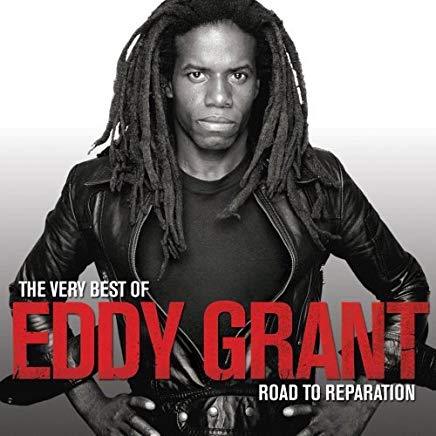
Eddy Grant - The Very Best Of: Road To Reparation
Eddy Grant hit the number one spot in the UK and Europe with “Baby Come Back” as part of The Equals in 1966. The celebrated multi-racial group had plenty more hits but after a serious illness he left the band, returned to Guyana to recuperate and prepared to launch his hugely successful solo career. A true perfectionist, he played every single instrument, sang every vocal part and produced every track on most of his solo albumsBest known for his huge hits “I Don’t Wanna Dance”, which hit the UK number one spot in 1982 and the seminal “Electric Avenue”, Eddy Grant’s songwriting was often as politically-charged as it was commercially-flavoured. The Clash featured a cover of “Police On My Back” for their Sandinista triple-set, and “Gimme Hope Jo’anna”, which gave Eddy Grant a hit in 1988, was a very thinly veiled attack on the Apartheid regime in South Africa [Jo’anna being short for ‘Johannesburg’]. “Jo'anna” has been heavily rotated on radio in protest in Zimbabwe of late.As his solo career took off, Eddy Grant moved to Barbados and set up the Blue Wave studio. He continued to release tracks by classic calypso and soca artists on his label Ice Records, as well as ‘Ringbang’ a genre of Caribbean music he created. Continuing to produce his own material Eddy Grant is as active and relevant as ever.The July tour is the first chance in over 20 years to connect with a truly important artist whose shows offer the promise of great music, some huge hits and a good time for all. This greatest hits collection will be heavily advertisied around Eddy's tour dates and promotion.
Eddy Grant hit the number one spot in the UK and Europe with “Baby Come Back” as part of The Equals in 1966. The celebrated multi-racial group had plenty more hits but after a serious illness he left the band, returned to Guyana to recuperate and prepared to launch his hugely successful solo career. A true perfectionist, he played every single instrument, sang every vocal part and produced every track on most of his solo albumsBest known for his huge hits “I Don’t Wanna Dance”, which hit the UK number one spot in 1982 and the seminal “Electric Avenue”, Eddy Grant’s songwriting was often as politically-charged as it was commercially-flavoured. The Clash featured a cover of “Police On My Back” for their Sandinista triple-set, and “Gimme Hope Jo’anna”, which gave Eddy Grant a hit in 1988, was a very thinly veiled attack on the Apartheid regime in South Africa [Jo’anna being short for ‘Johannesburg’]. “Jo'anna” has been heavily rotated on radio in protest in Zimbabwe of late.As his solo career took off, Eddy Grant moved to Barbados and set up the Blue Wave studio. He continued to release tracks by classic calypso and soca artists on his label Ice Records, as well as ‘Ringbang’ a genre of Caribbean music he created. Continuing to produce his own material Eddy Grant is as active and relevant as ever.The July tour is the first chance in over 20 years to connect with a truly important artist whose shows offer the promise of great music, some huge hits and a good time for all. This greatest hits collection will be heavily advertisied around Eddy's tour dates and promotion.
Original: $15.30
-65%$15.30
$5.35Description
Eddy Grant hit the number one spot in the UK and Europe with “Baby Come Back” as part of The Equals in 1966. The celebrated multi-racial group had plenty more hits but after a serious illness he left the band, returned to Guyana to recuperate and prepared to launch his hugely successful solo career. A true perfectionist, he played every single instrument, sang every vocal part and produced every track on most of his solo albumsBest known for his huge hits “I Don’t Wanna Dance”, which hit the UK number one spot in 1982 and the seminal “Electric Avenue”, Eddy Grant’s songwriting was often as politically-charged as it was commercially-flavoured. The Clash featured a cover of “Police On My Back” for their Sandinista triple-set, and “Gimme Hope Jo’anna”, which gave Eddy Grant a hit in 1988, was a very thinly veiled attack on the Apartheid regime in South Africa [Jo’anna being short for ‘Johannesburg’]. “Jo'anna” has been heavily rotated on radio in protest in Zimbabwe of late.As his solo career took off, Eddy Grant moved to Barbados and set up the Blue Wave studio. He continued to release tracks by classic calypso and soca artists on his label Ice Records, as well as ‘Ringbang’ a genre of Caribbean music he created. Continuing to produce his own material Eddy Grant is as active and relevant as ever.The July tour is the first chance in over 20 years to connect with a truly important artist whose shows offer the promise of great music, some huge hits and a good time for all. This greatest hits collection will be heavily advertisied around Eddy's tour dates and promotion.